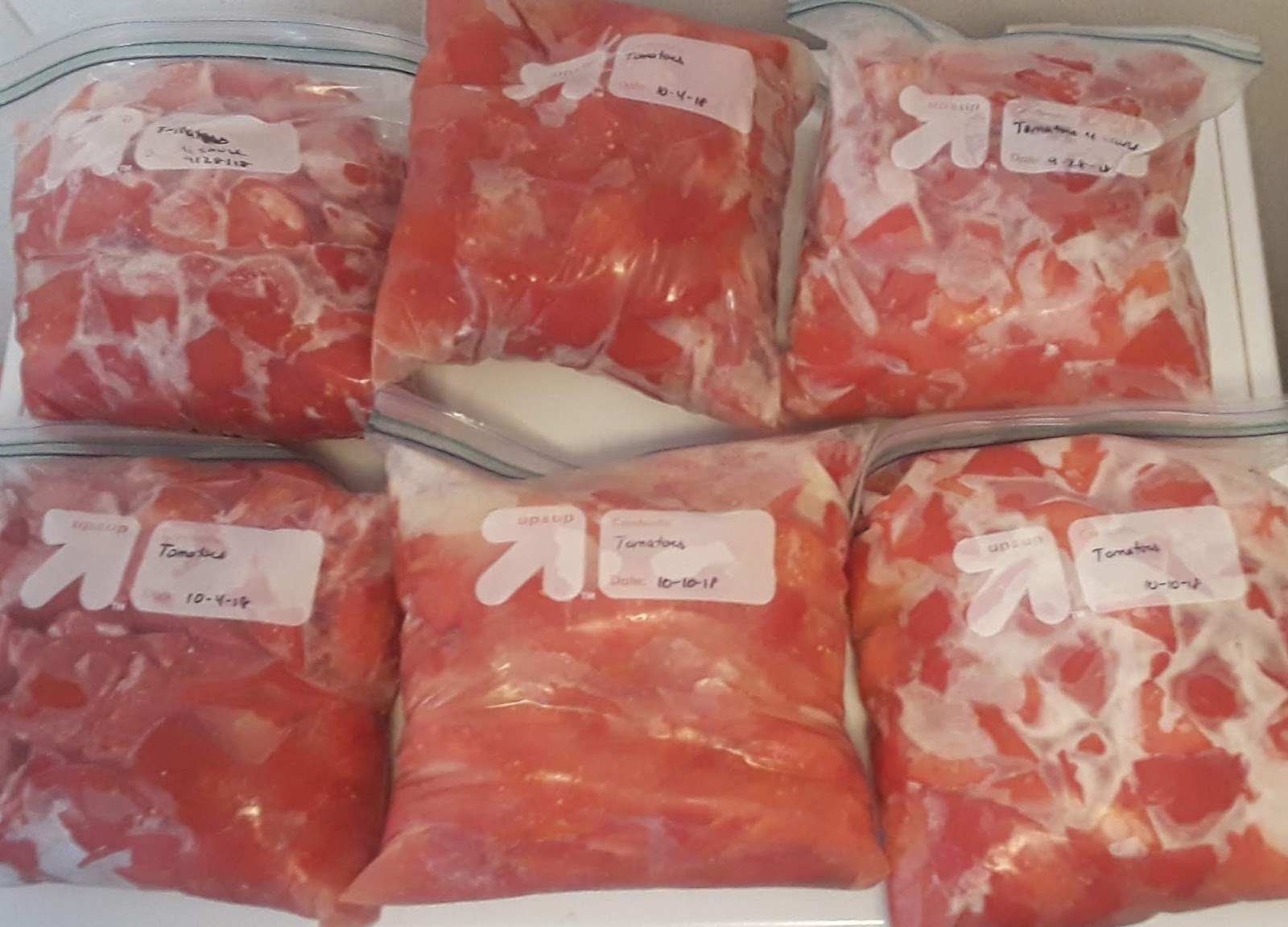
This year's tomato crop has been quite plentiful. I ate what I wanted fresh, made four different batches of salsa, dried boxes of them and gave away more boxes of them and still they come. Soon though there will no longer be garden fresh tomatoes so I am doing what I can to preserve my harvests as the season comes to a close. In this case I am freezing them now to make sauce with them later when I have more time available.
The process is quite simple. Each tomato gets washed and cored. One by one they are cut into chunks and tossed into a gallon freezer bag. I don't bother skinning them because the skins will fall off as they thaw when I am ready to use them. Once a bag is full, I squeeze out all the air and then throw it into the freezer. So far I have packed six gallons with tomato chunks, and may have to find room for a few more gallons before it is all said and done for the year.
When I am ready I will throw the frozen tomatoes into my big stock pot and cook them down. After they soften a bit they are run through my food mill to remove the seeds and skins. The skins and seeds will be bonus treats for the chickens (they really love that kind of stuff!). The remaining pulp will continue to cook down until the sauce reaches the thickness that I prefer. Last year I cooked down several gallons of tomatoes and only wound up with enough sauce for one batch of nine pints in the canner. This year I am hoping to have more to show for my hard work because I specifically grew sauce tomatoes. They have more flesh and less seeds than other tomatoes which will hopefully result in more sauce with less effort on my part.
Thursday, October 18, 2018
Monday, October 15, 2018
Dehydrating Celery
Celery is one of those crops that I don't give much thought to during the growing season. It takes a long time to grow to harvest size, so I usually wait until late summer/early fall to start collecting it. I use celery in my soups and stocks and add it fresh to stir fries and salads for a little extra crunch. It can tolerate some cooler weather, but not hard freezes so I am doing what I can to preserve some of my celery harvest while it's still here.
The easiest way to preserve celery is to dehydrate it or freeze it. Dehydrating is as simple as washing the stalks, then chopping them into chunks and laying them out to dry on a tray. I usually dry them on a screen because they shrink so much they will fall through the regular tray as they dry. I only have one sheet like this for my dehydrator, so I can only do one tray at a time. I don't use a ton of celery in my day to day cooking, so I should be able to dry enough for my purposes before the season ends.
If I end up with a lot of dried celery I may try grinding some and making my own celery salt for seasoning different dishes. I have a whole bed of this stuff which is way more than I will use in a year, but if I can preserve enough I may be able to skip growing celery next year and just use what I have stored up.
So far I have fit over 60 celery stalks into this quart jar and there is still room for plenty more. Hopefully the weather will cooperate long enough for me to finish filling this jar, but even if it doesn't I think I will still have plenty for this winter.
Tuesday, October 9, 2018
Dehydrating a Box of Peaches
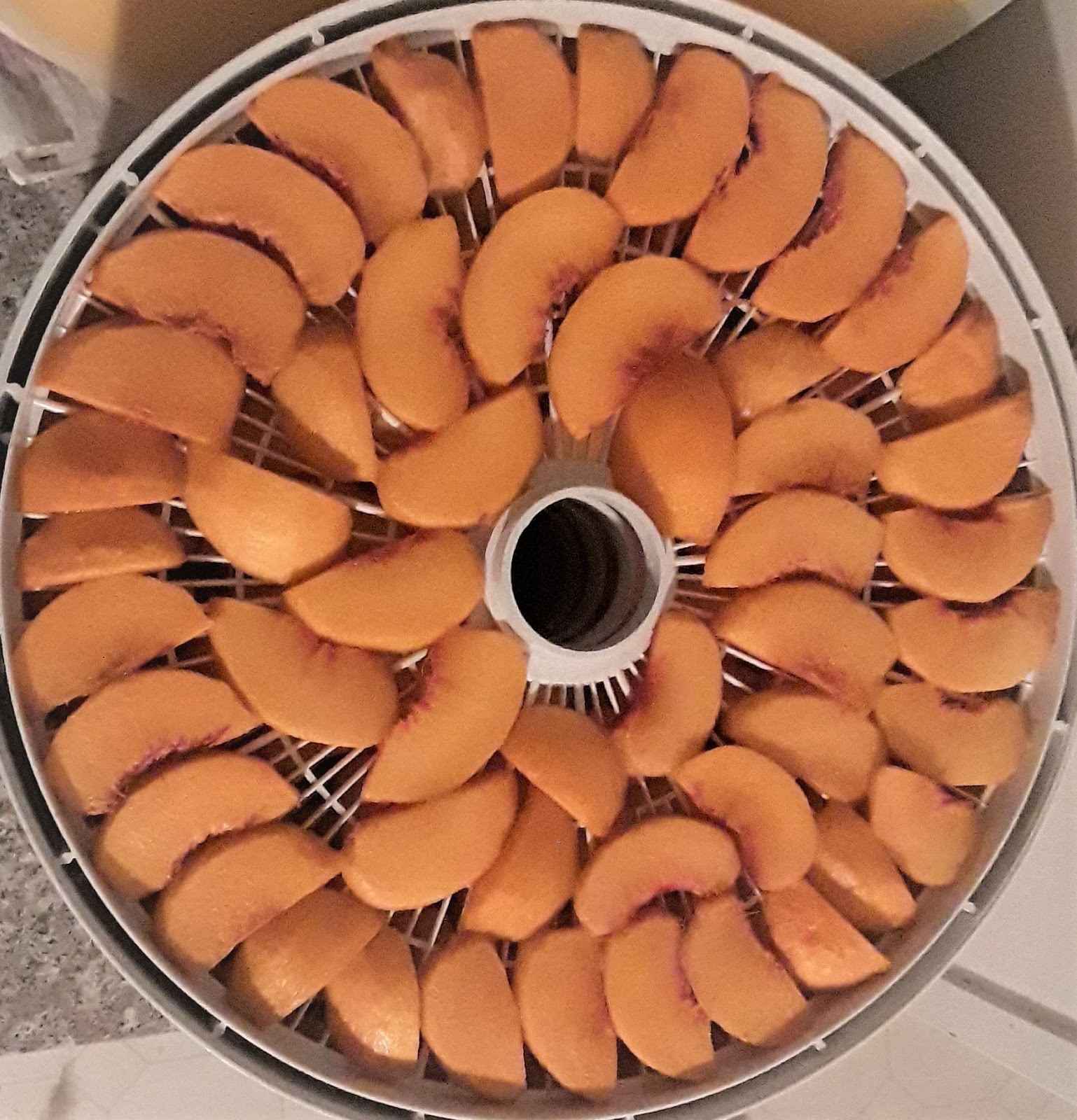
Signs of autumn are everywhere and the time for summertime fruits is coming to a close. I picked up a box of some of the last peaches of the year at the farmers market this weekend for $26. They were perfectly ripe and wonderfully sweet and I ate as many as I could fresh out of the box. I have lots of jars of canned fruits in storage this year, so in an attempt to save space I decided to store this box by dehydrating them. My dehydrator is limited by the number of trays that I have, so this endeavor took several days to work through the whole box.
One by one the peaches were washed, peeled, pitted and sliced. I like my dried fruit a little chewy so I try to make the slices a little thick when I prepare them for dehydrating. I laid them out on the trays as closely packed as possible and then stacked the trays up to dry.
The thicker slices take a little longer to dry, but most of them were done after about 24 hours. Anything that wasn't totally dry by that time was promptly eaten. When it was all said and done I had myself five quart jars filled with the sweetest, most delicious dried peaches I have ever tasted. They will be great pick me ups on long hikes and I bet they would make some excellent peach cobbler when they are reconstituted.
Friday, October 5, 2018
Peppers by the Pound
Cold nights are fast approaching so I have been spending today harvesting things that won't survive the frost. At the top of my list was the peppers. The plants were heavy with fruit and they wouldn't have the chance to ripen further, so I went through and picked every last pepper that I could find. I was rewarded with a rainbow of beautiful peppers.
I also picked about a gallon of jalapenos.
I already have plenty of salsa canned for the year, so I decided that I would keep these peppers in the freezer. The large bell peppers will be stemmed and seeded then cut in half and frozen for stuffed peppers. The smaller misshapen peppers will get sliced up into chunks and frozen in portions for adding to all kinds of dishes. The jalapenos will get stemmed and seeded and then I will prep them to become poppers and freeze the leftovers for later too.
Tuesday, October 2, 2018
Frost is Coming
A few nights ago we had a cold spell and some of the more tender veggies ended up with some frost damage. It wasn't a killing frost, but it was close and I wasn't expecting it since the forecast was only calling for overnight lows in the 40's. Daytime temps have still been up in the 80's here, but being that it is high desert here, night time temps do tend to have some wild swings at this time of year.
There are a few crops that I did want to protect from colder temps. The tomatoes and peppers are still heavily laden with fruit that needs more time to ripen so I will be covering those with a sheet of heavy plastic to ward off the night chill for a few more weeks. They can also enjoy a little extra heat during the day if I leave them partially covered. Other crops like my cucumbers, summer squash and green beans will be left to their own devices, so I am making my final harvests in those beds this week. I am excited that my late nights of canning pickles will be behind me for this year. I will also be cutting and drying as much celery as I can to preserve it for future use in soups and chicken stock I will be making this winter.
Some crops like my root crops of potatoes, carrots and parsnip I will harvest at my leisure for quite a few more weeks. Their tender tops might die back, but the ground will protect the roots from freezing for a few more months. I will try to harvest all that I can before the ground freezes solid, but for now I will let the cold nights add sweetness to my carrots and parsnips.
Saturday, September 29, 2018
Preserving a Box of Pears
Pears are one of my favorite seasonal treats but their season never seems to last very long. I was able to get a decent price on a box of perfectly ripe Bartlett pears at the local farmers market and when I finally found a few hours to get some work done I went about the business of preserving them.
I started with canning them. One by one each pear was peeled, quartered and cored and the pieces were soaked in a lemon juice solution to prevent browning before I processed them with light syrup in the canner. I only did one canner load so I ended up with 8 pints of canned pears.
The rest of the pears were getting close to being over ripe and were very sweet so I decided to dehydrate what was left. They were also peeled, quartered and cored before they were laid out on the trays to dry. The end result were leathery pieces of pear that were so sweet that they tasted like candy. I was able to dry ten pounds of pears down to a small enough volume that they only filled a quart jar. I have a feeling that these sweet treats won't be around long, so next year I may have to be sure to make more.
Tuesday, September 25, 2018
Plum Wine: Round Two
The end of the summer fruit season is closing in and I have been working hard to preserve what I can in what little time I have available for my endeavors. This weeks farmer's market score was a beautiful box of little Italian plums that I got for $20 and a bottle of Cherry wine. The Cherry wine was just freshly bottled so I had another large carboy available to make more wine and so that is what I did with my fresh box of plums.
The 24 pound box of plums would be just enough to make four gallons of plum wine, but first I had to wash, pit, and chop up all the plums. I think the whole process took me five or six hours, but it will be well worth the effort.
The sweet golden flesh of these plums is a stark contrast to the deep red plums that I processed for the other batch of plum wine that I started a few weeks ago. I am curious as to the color difference in the final product of these two wines. I also believe that these plums are a bit sweeter, so I am hoping the finished product becomes a wonderful sweet dessert wine.
One by one the plums filled the primary fermenting bucket and when I was done chopping I topped it all off with boiling water and several pounds of sugar. After it cooled down for several hours I added a few key ingredients to help break down the fruit and add body to the wine and then let it sit for twelve more hours before I added the yeast. It will spend about a week in the primary before I filter out the juice and transfer it to the carboy where it will finish fermenting and become wine. I think I have now started enough wine to last me a very long time. All that is left to do is to find a place to store all of it!
Subscribe to:
Posts (Atom)